LHE Sims: HackerOne Bug Hunt 2026
Dive into the key insights from HackerOne Bug Hunt 2026, where ThreatSims simulated the intensity of a professional Live Hacking Event for 47 finalists.
Published on March 2, 2026
There is a distinct kind of energy that fills a room during a Live Hacking Event (LHE). It is not just about finding bugs. It is about speed, precision, and the pressure of competing in real-time against some of the sharpest minds in the room.
That is exactly the atmosphere we wanted to capture for HackerOne Bug Hunt 2026.
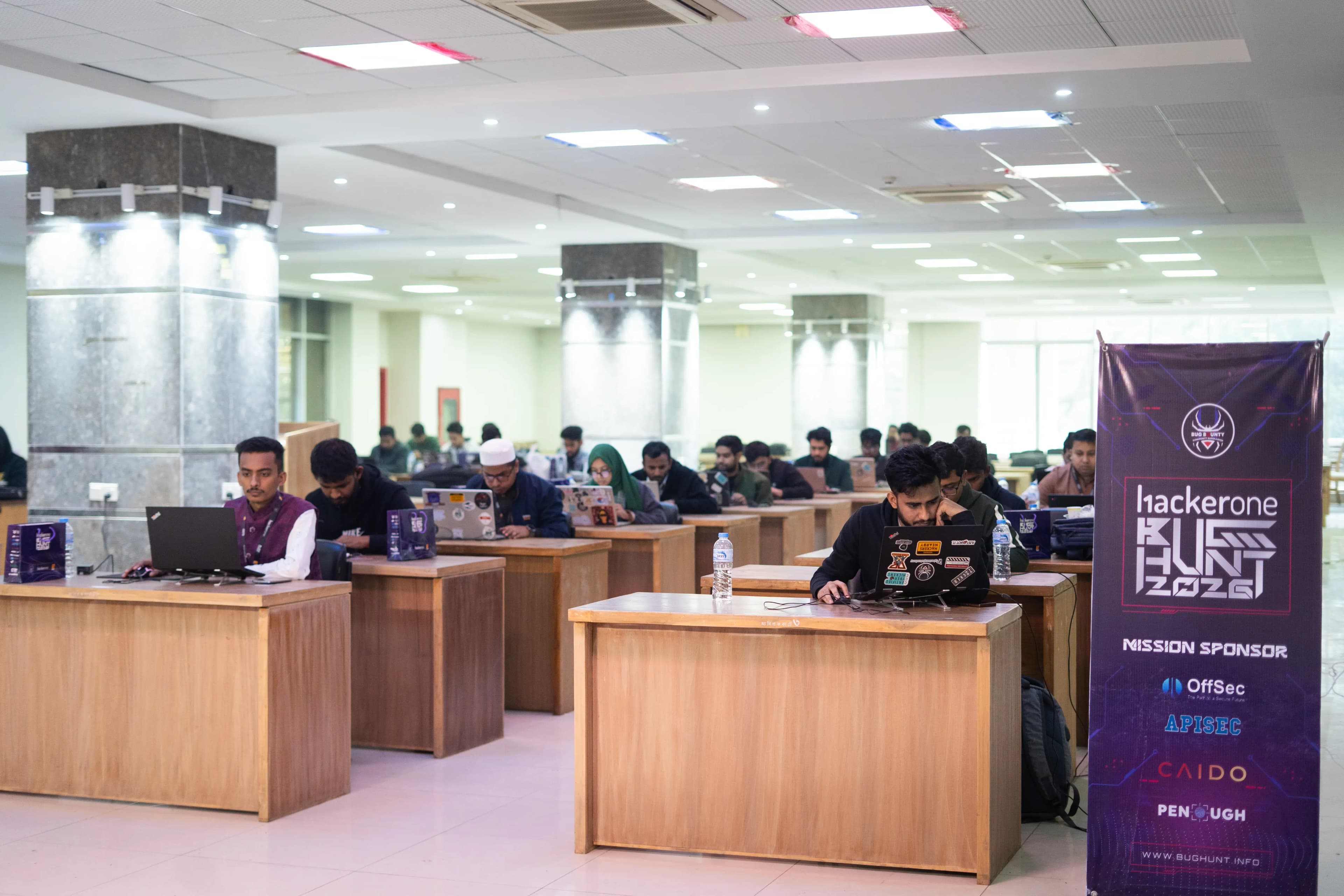
Photo: Finalists engaged during the 4-hour final contest
This event was a cybersecurity showcase blending hands-on competition with expert-driven learning. Organized by the Bug Bounty Community Bangladesh (BBCB) with HackerOne as the title sponsor, the event needed a robust infrastructure to simulate the intensity of a professional bug bounty environment. As the Technology Partner, ThreatSims stepped in to provide the battleground.
Our goal was simple: empower the community by providing a realistic platform that mirrors the actual workflow of a bug bounty program. From report submission to live triage, we wanted the finalists to feel the rush of a real LHE.
The Infrastructure of a Bug Hunt
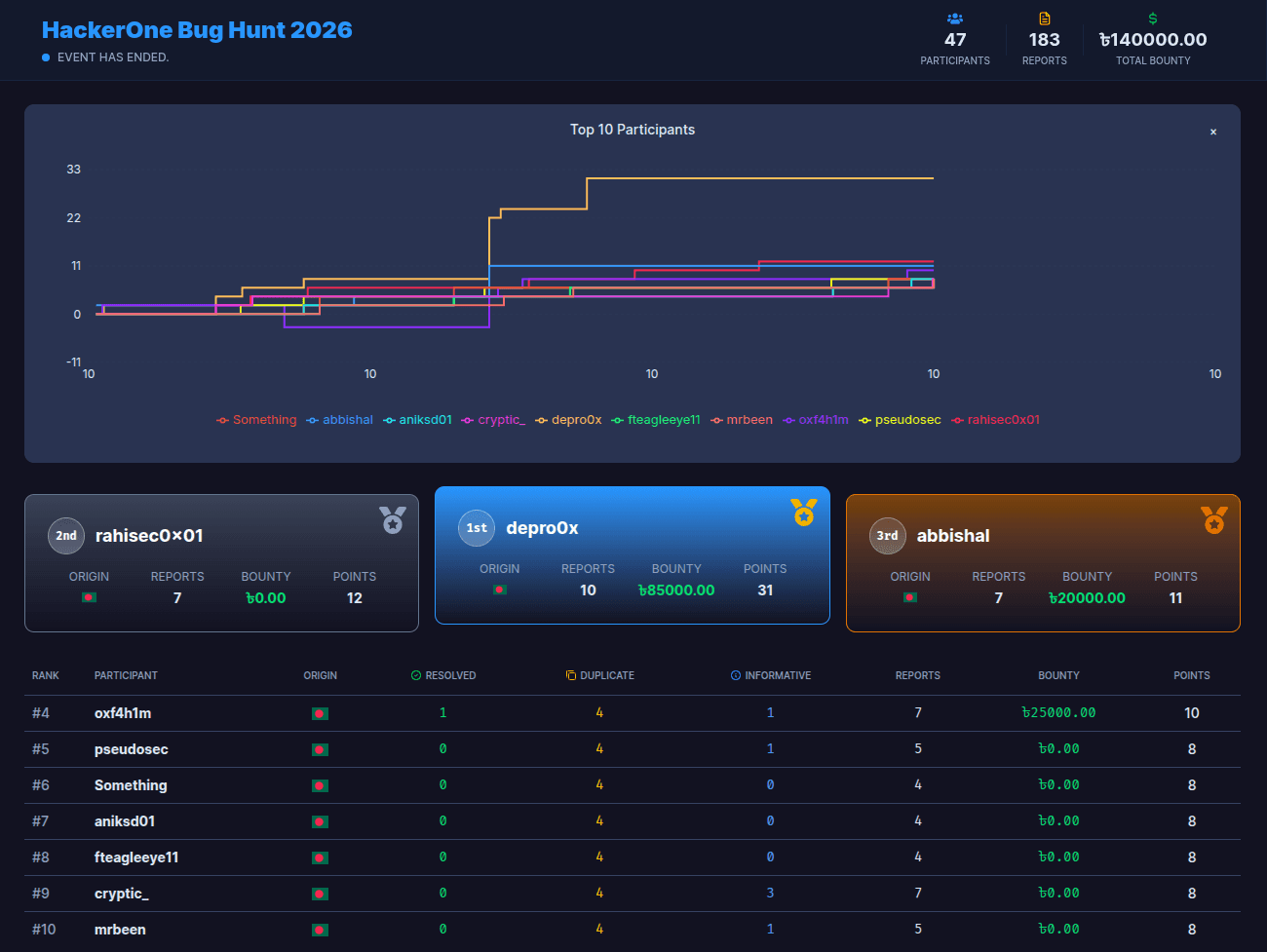
Photo: The event live scoreboard
To ensure a smooth experience, each of the 47 finalists simultaneously spawned a unique, isolated, vulnerable target lab on the ThreatSims platform. This enabled them to thoroughly test the application without affecting the integrity of other participants' instances. Surrounding these labs was a complete ecosystem: a reliable report submission system, a real-time inbox, and a dedicated triager panel for the admin team.
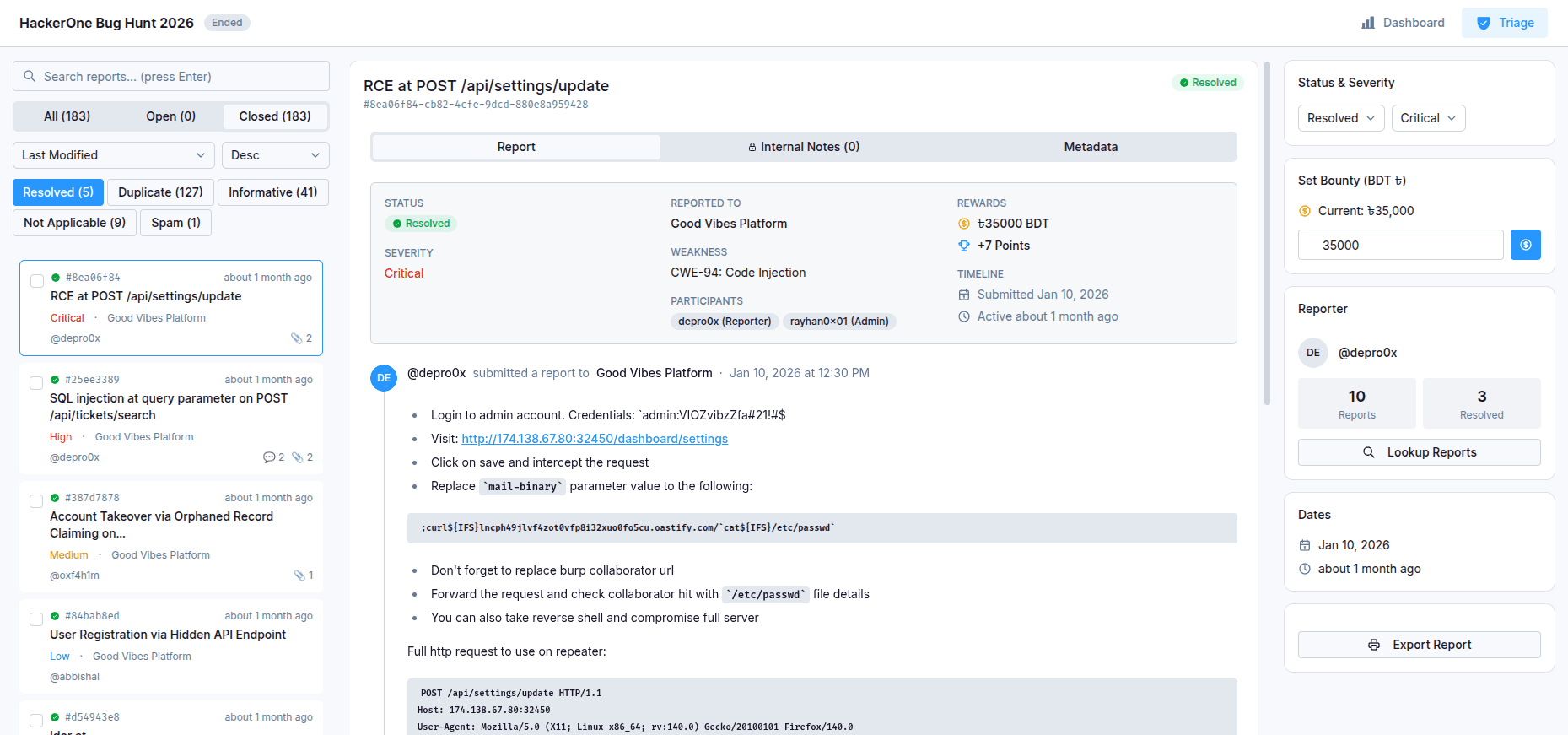
Photo: Triager Panel view for admins
The key to a successful LHE is triage velocity. During the 4-hour sprint, the ThreatSims platform processed a total of 183 reports. With our streamlined interface, the triage team managed an average first response time of just 9 minutes. The ability to quickly filter, tag, and change the status of reports allowed the event to flow smoothly, ensuring finalists knew exactly where they stood on the leaderboard in real-time.
The Event by the Numbers
The engagement level was incredible. The finalists didn't just scratch the surface; they went deep. We saw a heavy focus on high-severity issues and a 95% valid rate, proving that the participants were looking for impactful vulnerabilities rather than low-hanging fruit.
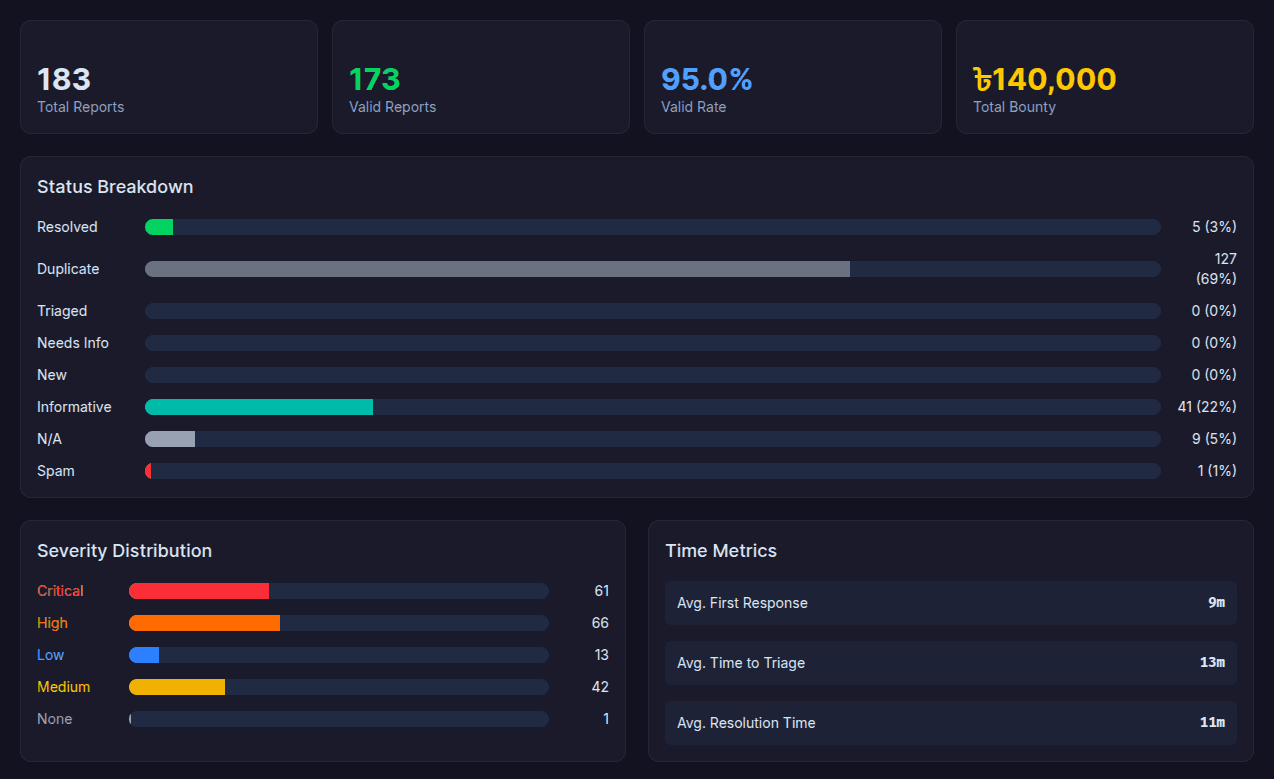
Photo: Partial event report metrics from Triager Panel
Speed was the name of the game. The platform's efficiency, paired with the skill of the triage team, resulted in impressive turnaround times. The severity breakdown was also interesting. The majority of reports fell into the Critical and High categories, indicating that the program policy successfully encouraged finalists to escalate privileges and demonstrate maximum impact.
The Vulnerabilities
The target environment was designed to mimic a complex, modern application with layered security flaws. The program policy encouraged chaining bugs, and the finalists delivered.
We observed five primary vulnerability classes dominating the submissions:
Broken Access Control (44 reports)
Injection (14 reports)
Sensitive Info Exposure (14 reports)
SQL Injection (13 reports)
Cross-site Scripting (XSS) (11 reports)
Attack Scenarios and Chaining
The event featured specific, planted vulnerabilities designed to test lateral movement and privilege escalation. These included:
A hidden API endpoint for user account registration.
Account Takeover (ATO) via orphaned record claiming.
IDOR in an authenticated endpoint disclosing credentials.
SQL Injection on a moderator page.
Blind RCE in admin settings.
One of the highlights of the event was a special bounty awarded for a sophisticated exploit chain. A finalist successfully chained the SQL Injection with the Blind RCE to read the RCE output, earning a special bounty on the report.
The "Duplicate" Reality
In a 4-hour window with 47 finalists targeting the same identical asset, collision is inevitable. While 69% of reports were duplicates, this is a healthy metric for a LHE. It shows that the vulnerabilities were discoverable and that multiple finalists were successfully identifying valid attack vectors. It also highlights the importance of speed, only the first valid report secured the bounty.
Enabling the Community
At ThreatSims, we believe in the power of community. Partnering with the Bug Bounty Community Bangladesh allowed us to contribute to the ecosystem in a tangible way.
We eliminate the operational headaches of live events by providing a comprehensive infrastructure solution. This ensures your attention remains where it drives the most value: the hackers and the learning experience.
We look forward to powering the next generation of bug hunts.